How to identify it
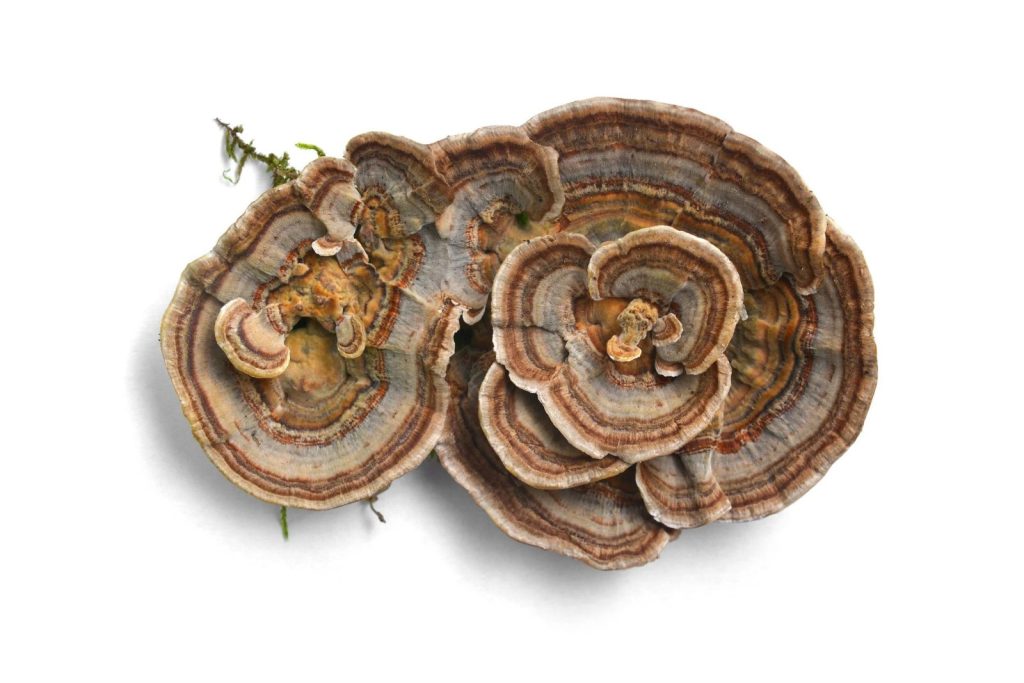
Turkey tail forms tiers of thin, leathery, fan shaped brackets with concentric bands of colour and a velvety surface. Underneath are tiny white pores, not gills, which separates it from lookalikes.
Where it grows
It is found all year round on dead hardwood across the UK and is one of the easiest fungi to spot on a woodland walk.
Growing conditions
Turkey tail is vigorous and tolerant. It grows well on hardwood sawdust or inoculated logs and fruits across a wide temperature range with good fresh air and moderate humidity. It is slower than oysters to produce fruits but rarely fails.
Uses
It is too tough to eat, so it is traditionally dried and simmered into a tea. We do not make health claims about any mushroom.
Frequently asked questions
Can you eat turkey tail?
Not as a cooked mushroom. It is leathery and is usually made into a tea.
How do I tell turkey tail from lookalikes?
Check the underside: turkey tail has tiny pores, not gills, and a velvety, banded top.
Does turkey tail grow wild in the UK?
Yes, it is very common on dead hardwood all year round.