How to identify it
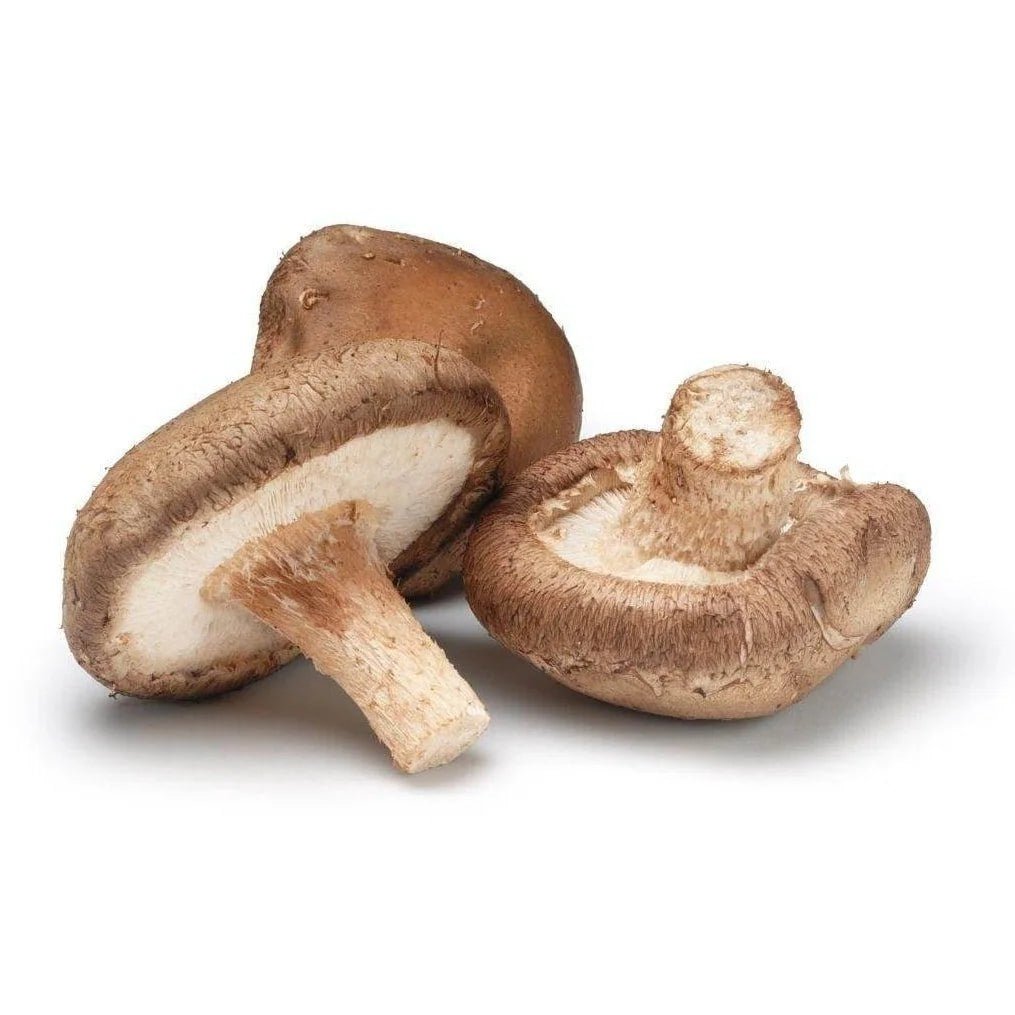
Shiitake has a tan to dark brown cap, often with pale flecks or cracks across the top, and cream gills underneath. The stem is tough and fibrous, so it is usually trimmed off and saved for stock.
A long history
Shiitake has been cultivated on logs in Japan and China for many centuries and is one of the most widely grown mushrooms in the world. It is not native to the UK, so home growing relies on kits, logs or blocks.
Growing conditions
Shiitake needs a long colonisation period. A block goes white, then slowly turns brown as the mycelium forms a protective skin; this browning is normal and a sign it is ready to fruit. A cold shock, such as a night in the fridge or a soak in cold water, helps trigger pinning. Fruit at 12 to 20°C with good humidity and some indirect light.
Grower’s tip: after each flush, rest the block for one to two weeks, then soak it in cold water overnight to wake it up for the next one.
In the kitchen
Shiitake has a firm, meaty texture and a strong savoury flavour that deepens when dried. Slice the caps for stir fries, soups and noodle dishes, and keep the stems for stock.
Frequently asked questions
Why has my shiitake block turned brown?
That is normal. The mycelium forms a brown protective coat before it fruits.
How long does shiitake take to grow?
Allow two to three months from inoculation to first harvest, much longer than oyster mushrooms.
Can I dry shiitake?
Yes. Dried shiitake keeps for months and has an even stronger flavour.