Seeing something unusual on your grow bag or kit? Pick what you can see below to narrow down the most likely cause, then follow the advice. If in doubt, keep the bag sealed until you are sure.
What can you see?
Pick the closest match to narrow down the list.

Contamination
Green mould (trichoderma)
What it looks like: White, fluffy patches that turn bright or dark green as they spread, often starting where grain or substrate is damp.
Cause: Airborne spores getting in during inoculation or through a damaged filter, often helped by warm, wet conditions.
What to do: Do not open the bag indoors. Seal it in a bin bag and dispose of it outside, then clean your workspace with 70% IPA before your next grow.
Read the full guide →Photo: Vicenny, CC BY-SA 4.0, via Wikimedia Commons


Contamination
Pink or orange mould
What it looks like: Bright orange or salmon pink fluffy growth that spreads quickly, often through the filter patch.
Cause: Neurospora, a very fast growing mould that thrives on grain.
What to do: Bag it up and dispose of it outside straight away without opening, as it spreads easily.
Read the full guide →Photo: Hariadhi, CC BY-SA 4.0, via Wikimedia Commons


Contamination
Black mould
What it looks like: Dark grey to black powdery spots or fuzzy growth with black tips.
Cause: Mould spores entering through damage to the bag or during inoculation.
What to do: Seal and dispose of the bag outdoors. Wear a mask if it is powdery and clean the area thoroughly.
Read the full guide →Photo: pynklynx, CC0, via Wikimedia Commons

Contamination
Cobweb mould
What it looks like: Fine, wispy grey growth that looks like cobwebs and spreads very quickly over the surface, much faster than healthy mycelium.
Cause: Too much humidity with too little fresh air during fruiting.
What to do: Caught early, spot treat with 3% hydrogen peroxide and increase fresh air. If it covers large areas, dispose of the kit.
Read the full guide →Contamination
Bacterial contamination
What it looks like: Wet, greasy looking grain that will not colonise, cloudy liquid in the bag, or a sour, rotten smell.
Cause: Grain that was too wet or not fully sterilised, or poor technique during inoculation.
What to do: Bacteria cannot be fixed once established. Dispose of the bag and keep grain at the right moisture next time.
Read the full guide →Usually harmless
Yellow or amber droplets
What it looks like: Small yellow or amber droplets on the surface of healthy white mycelium.
Cause: Metabolites: liquid the mycelium produces when it is stressed, often from heat.
What to do: Usually harmless. Move the bag somewhere a little cooler and keep an eye on it.
Read the full guide →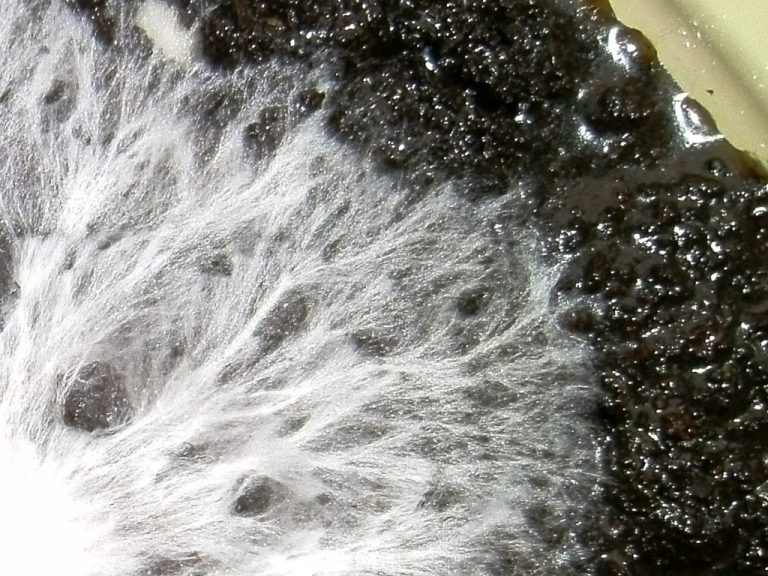
Usually harmless
Fuzzy white growth on stems
What it looks like: Soft white fuzz around the base of mushrooms or on the surface of the block, the same colour as the mycelium.
Cause: Healthy aerial mycelium, usually a sign that carbon dioxide is building up.
What to do: Not contamination. Give the kit more fresh air and it will settle down.
Read the full guide →Photo: Tobi Kellner, CC BY-SA 3.0, via Wikimedia Commons

Usually harmless
Colonisation has stalled
What it looks like: Mycelium has started but stopped spreading for a week or more, with no obvious mould.
Cause: Usually too cold, or the bag is struggling with a hidden bacterial patch.
What to do: Move it somewhere around 20 to 24°C and give it another week. If it smells sour or looks wet, treat it as bacteria.
Read the full guide →Frequently asked questions
Is all fuzzy growth contamination?
No. White fuzz is usually healthy mycelium. Coloured fuzz, especially green, black, pink or orange, is a warning sign.
Can contamination make me ill?
Some moulds can irritate the lungs, so never open a contaminated bag indoors and wear a mask when disposing of powdery mould.